Imagine a student writing an essay. With a few keystrokes, they ask ChatGPT for help — and within seconds, they have a draft. It’s fast, easy, and seems like magic. But what happens to their thinking in this process? Are they learning, or just copying?
A recent MIT ChatGPT Brain Study explored this very question – effect on ChatGPT on our brain’s cognitive ability.
It tracked how people’s brains work when writing essays using ChatGPT, Google search, or just their own knowledge. The findings raise important concerns about how AI tools like ChatGPT could impact our memory. They might affect critical thinking and our sense of ownership over our work. This is especially true if we rely on them too much.
Whether you’re a student, educator, or someone curious about the future of learning, it’s worth asking: How can we use AI without letting it make us mentally lazy?
This article does helps you make sense of this MIT AI Research Paper: Your Brain on ChatGPT: Accumulation of Cognitive Debt when Using an AI Assistant for Essay Writing Task
Then, I have shared how we can use this information to improve our interactions with AI tools like ChatGPT.
Key Takeaways:
- The study found that people using ChatGPT showed less brain activity in areas linked to memory and critical thinking. Over time, this could make it harder to think deeply or remember what you’ve written.
- ChatGPT users struggled to recall their own writing or feel a strong sense of ownership over their essays. In contrast, those who used Google or wrote unaided remembered more and felt prouder of their work.
- The problem isn’t ChatGPT itself — it’s how we use it. The study suggests that blending AI support with active engagement can protect our thinking skills. Activities like revising, reflecting, and questioning AI outputs are beneficial.
If you’re wondering how to harness AI’s power without dulling your mind, keep reading. We’ll explore practical tips for building better AI tools for education as well. You will also find ideas for developing smarter habits.
What did the MIT ChatGPT brain study explore?
The MIT ChatGPT brain study set out to find an answer. It aimed to address a simple but important question:
👉 What happens to our brain when we use AI tools like ChatGPT to help with tasks that normally require deep thinking — like writing an essay?
To explore this, researchers asked participants to write essays in three different ways:
- 💻 Using ChatGPT only
- 🌐 Using Google search (but no AI tools)
- 🧠 Using only their own knowledge, without any external help
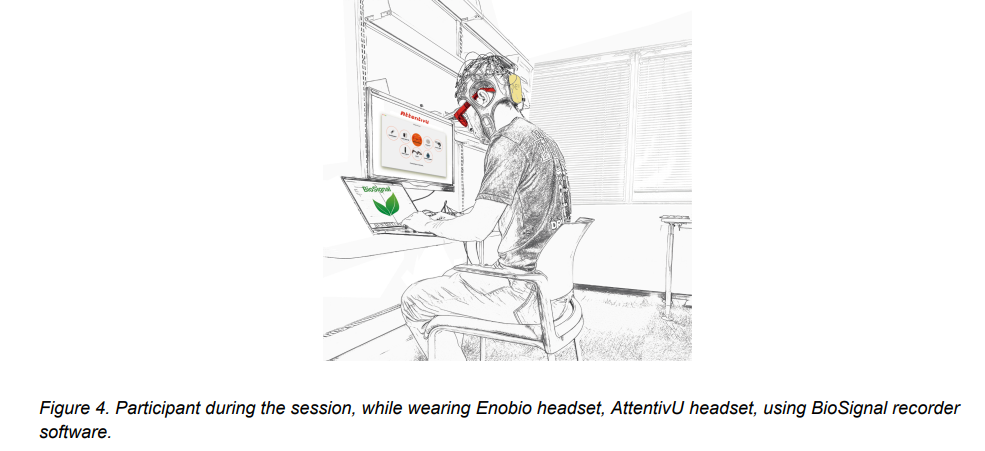
While people wrote, the scientists used brainwave sensors (EEG). They tracked how actively their brains were working. The focus was especially on areas tied to memory, focus, and critical thinking.
They weren’t just interested in whether people finished faster or produced better writing.
The real focus was on what was happening inside the brain.
Another aspect was whether relying on AI might reduce the mental effort people put into thinking. It could also impact remembering and forming arguments.
Over multiple sessions, the study also looked at:
- How much people felt they owned the work they created?
- How well they could remember or quote what they wrote
- How their brains responded when they switched from using AI to working without it
In short: This study explored not just what people produced with AI. It also examined how AI tools affect our thinking along the way.
MIT ChatGPT Brain Study results – What did they discover?
The MIT ChatGPT brain study uncovered some brain-popping patterns (sorry for this lame joke).
It showed how AI tools like ChatGPT can change the way we think.
This change often occurs in ways we don’t notice while using them. Here’s what they found:
Using ChatGPT led to less brain activity
When people wrote their essays using ChatGPT, their brains showed lower activity in areas linked to:
- Memory
- Focused attention
- Critical thinking
Compared to people who used Google search or wrote without any tools, ChatGPT users’ brains simply weren’t working as hard. This means that while AI made the task easier, it also made people less mentally engaged.
Memory and recall took a hit
Participants who used ChatGPT had trouble remembering what they had just written.
For example: Many couldn’t quote even a single sentence from their essay when asked. All this, even though they’d just finished writing it!

In contrast, people who used search engines or their own knowledge remembered their arguments much better. They could explain what they wrote without looking.
More reusing AI phrases
The researchers noticed that participants who wrote their essays with ChatGPT were significantly more likely to reuse specific phrases from the AI’s suggestions. They continued to do this in later writing, even when ChatGPT was no longer available.
At first glance, that might not seem like a big deal. After all, if something sounds good, why not use it again?
But this kind of linguistic mimicry reveals something deeper: a drop in originality and mental passivity. The brain begins to rely on previously seen phrases instead of forming new ideas from scratch.
The study showed that participants who used ChatGPT:
- Repeated full phrases and sentence patterns more often
- Leaned on the same vocabulary and framing in follow-up tasks
- Struggled to rephrase ideas in their own words
This reuse didn’t happen nearly as much among participants who used Google or their own knowledge. In fact, the linguistic diversity of their writing stayed much higher — even across sessions.
Why is this a red flag?
When your brain begins to repeat what it saw earlier, it’s a sign that you’re processing less. This is especially true when repeating AI content. It shows that you are copying more. That’s mental passivity in action.
- It reduces your creative flexibility
- It limits your ability to express unique viewpoints
- It reinforces the AI’s voice over your own
Over time, this can shape how you speak. It can also influence how you think, especially if you regularly use LLMs like ChatGPT for writing tasks.
The reuse of AI-generated language isn’t just a convenience. It can be a clue that you’re losing touch with your original voice.
People felt less ownership over their work
ChatGPT users often said the essay didn’t really feel like their work.
Some said it felt like the AI’s work — or a mix of AI and their own ideas.

By comparison, people who used Google or no tools felt a stronger connection to what they’d written.
AI reliance made switching back harder
When people who had been using ChatGPT were asked to write an essay without it, their brains struggled. They found it challenging to re-engage at the same level as those who’d never used AI.
In other words, once people got used to offloading the hard thinking to ChatGPT. It was difficult for them to reignite their brains at full power. Getting back to original cognitive capacity was tough.
Writing with AI alters brain connectivity
Using EEG (brainwave) data, researchers didn’t just look at how much brain activity there was, but also how different brain regions communicated while people were writing essays.
Researchers tracked the direction of brain connectivity. Specifically how information flowed between areas responsible for ideation, decision-making, and motor control (like typing or handwriting).
When writing without AI (brain-only mode):
- The brain showed bottom-up connectivity.
- Sensory and memory-related areas were actively feeding new content into executive decision areas.
- This suggests the brain was actively generating, selecting, and structuring ideas.
In plain terms: Your brain was “in creation mode,” actively building arguments and content from scratch.
When writing with ChatGPT:
- The flow flipped to top-down connectivity.
- Executive control areas were interpreting and organizing content — but not generating much of it.
- Instead of building ideas from internal thought, the brain was mostly evaluating external input (i.e., what ChatGPT had suggested).
In plain terms: Your brain was “in editor mode,” reviewing and stitching together AI-generated suggestions — not generating original content.
Why this matters:
Even if you’re fully focused while using ChatGPT, your brain isn’t engaging in the same way. You’re less likely to:
- Form original mental connections
- Tap into memory
- Think divergently (i.e., explore multiple ways of expressing or approaching a topic)
And over time, this change in flow can train your brain to expect answers, rather than build them.
Search engines kept the brain more active
Google search users had stronger brain activity than ChatGPT users. However, their activity was not as strong as those who worked without any tools. This suggests that searching and choosing sources keep us thinking more deeply. Evaluating information further enhances our deep thinking compared to simply reading AI-generated text.
The big takeaway?
AI tools like ChatGPT are powerful helpers.
But if we’re not careful, they can quietly reduce the mental effort we put into thinking, learning, and creating.
Implications of ChatGPT on brain for everyday AI use
AI tools like ChatGPT are fast, smart, and incredibly convenient. But this MIT ChatGPT brain study reveals a deeper concern: if we rely too much on AI, we may slowly lose the mental muscles we’re trying to build.
That matters a lot — especially for students, professionals, and anyone trying to learn, think critically, or create original work.

Here’s why this study should make us pause and reflect:
We could be thinking less without realizing it
When we use ChatGPT to generate ideas quickly, we bypass a crucial process. We skip forming thoughts. We avoid evaluating arguments and making decisions. This process is necessary but challenging.
Without that effort, our brains stay idle. Over time, this can lead to what researchers call cognitive offloading. It involves outsourcing thinking to machines and losing the habit of doing it ourselves.
Memory and learning rely on mental effort
Struggling to remember what you wrote with AI? That’s not a fluke — it’s the result of reduced brain engagement. When the brain isn’t actively involved, it doesn’t store or retain information effectively.
For students, this means lower understanding and weaker long-term learning — even if the essay “looks” good on the surface.
Critical thinking doesn’t come pre-packaged
AI tools give neat, well-worded answers. But critical thinking involves:
- Asking tough questions
- Comparing viewpoints
- Spotting flaws or gaps
- Forming your own conclusions
If we rely only on what AI gives us, we risk losing these skills. This is especially true if we don’t challenge or customize it.
Switching back to manual thinking gets harder
The study showed that people who used AI for multiple sessions had trouble “turning their brains back on.” This occurred when they were asked to write without help. Their brain activity didn’t bounce back to previous levels. This suggests that even temporary reliance on AI can have lingering effects on cognitive performance.
It’s about more than productivity — it’s about agency
Feeling connected to your work is essential. It’s like you own your ideas. This connection is a key part of confidence, growth, and creativity. If AI makes us feel like passengers rather than drivers, we lose more than just brain power. We lose personal investment in what we create.
In short, AI isn’t the enemy. But unchecked reliance on it can quietly undermine the very skills we value most: critical thinking, memory, and ownership.
Cognitive Debt: The long-term cost of AI convenience
We often think of using tools like ChatGPT as a time-saver — and in many ways, they are. But the MIT ChatGPT brain study introduces a more subtle concept with serious implications: cognitive debt.
Just like credit card debt, cognitive debt builds up when we continually offload mental effort to an external source. In this case, we offload to an AI assistant like ChatGPT, Claude, Gemini, etc. The task may feel easier in the moment, but over time, our mental sharpness, focus, and learning depth can decline.
What is Cognitive Debt?
Cognitive debt happens when our brains get used to not thinking deeply. It’s the result of:
- Not engaging with problems fully
- Letting AI generate content without review or reflection
- Skipping the hard — but important — steps like researching, organizing, or paraphrasing
In the study, participants who used ChatGPT over multiple writing sessions showed:
- Lower brain activity in key regions linked to memory, attention, and ideation
- Weaker ability to recall what they wrote
- Reduced sense of ownership over their output
These are all signs that thinking had been “outsourced” — and the brain had essentially stepped back.
Why it’s a long-term risk
The scary part? Cognitive debt doesn’t show up all at once. You might not notice anything after one or two uses. But just like skipping workouts or relying too much on GPS, small changes add up:
- You may feel less confident generating ideas from scratch
- You might struggle to explain or defend AI-written content
- You could lose touch with your own voice and original thinking style
In the MIT ChatGPT Brain study’s later sessions, people who’d been using ChatGPT struggled to re-engage their brains. They faced challenges when asked to write without it. Even short-term reliance seemed to “dull” their mental reflexes.
Balance is key to manage cognitive debt from AI
AI is a powerful tool. However, we need to treat it like a power tool. It is not a replacement for craftsmanship. If used too casually, it can quietly erode our skills rely on to think, learn, and grow.
So next time you reach for ChatGPT, ask yourself: Is this helping me think better — or just faster?
That small pause could protect you from a growing pile of cognitive debt.
Competence Gap: AI helps skilled learners, hurts novices
One of the most important, and perhaps overlooked insights from the MIT ChatGPT brain study is this: the benefits of using AI like ChatGPT aren’t the same for everyone.
In fact, the study found that your skill level determines whether AI helps or harms your thinking.
The MIT ChatGPT brain study shows us that AI doesn’t level the playing field — unless we design it to. For beginners, ChatGPT can unintentionally become a crutch. For skilled users, it’s a creative amplifier.
What the MIT ChatGPT brain study found about competence gap:
The researchers looked closely at how different users interacted with ChatGPT based on their existing writing and reasoning skills. The results were striking:
- Skilled writers and thinkers used ChatGPT to enhance their work.
They already had a clear sense of structure. They understood argument and audience. They used the AI tool to polish language, cross-check points, or explore alternatives. - Less experienced or lower-skill users leaned heavily on ChatGPT for content creation. Instead of thinking through ideas or crafting arguments, they tended to accept AI responses at face value. This led to:
- Weaker understanding of the topic
- Poorer memory of what they wrote
- Less personal engagement and ownership
This difference creates what the researchers call a competence gap. The same tool produces very different outcomes depending on who’s using it.
Why this is a problem:
For educators and product designers, this finding is a wake-up call. It means that tools like ChatGPT:
- Could empower advanced learners
- But could also disempower novices, reinforcing poor habits and bypassing the learning process
In short: AI has the potential to widen educational gaps. It rewards those who already know how to think critically. It makes it harder for beginners to develop those skills.
What can be done about AI-led competence gap:

We need to create AI experiences that adapt to different users. These experiences should offer the right level of support. They must not make it easy to “opt out” of thinking.
Here’s what can help:
1. Tiered AI Guidance
Tools can offer different modes:
- Beginner mode that asks questions, offers guided prompts, and limits full-text suggestions.
- Advanced mode that provides nuanced feedback but expects user initiative.
2. Critical Engagement Prompts
Instead of just delivering an answer, AI tools can pause and ask:
- “What do you think about this?”
- “Would you frame this idea differently?”
- “Do you agree or disagree — and why?”
These moments prompt the user to reflect, not just consume.
3. Progressive Unlocking
Allow more advanced AI features like auto-drafting only after the user demonstrates understanding. This can be done through quizzes, paraphrasing, or structured outlines.
4. Skill-Building Nudges
Track user behavior to detect over-reliance (e.g., copy-pasting too often), and suggest alternatives:
- “Try drafting this paragraph yourself first — I’ll help you edit it later.”
- “Want to compare this with a different viewpoint?”
To build truly inclusive, empowering AI tools, we must focus on teaching users how to think, not just how to prompt.
How to use AI or ChatGPT without losing critical thinking?
The MIT ChatGPT brain study isn’t telling us to avoid AI — it’s showing us how to use it more wisely. Like a calculator or spell-checker, AI should support our thinking, not replace it.

Here are some simple, practical ways to use tools like ChatGPT without weakening your brainpower or critical thinking skills:
Use AI as a starting point — not the final product
Think of ChatGPT like a brainstorming partner. Ask it to outline ideas or offer examples, but don’t stop there.
Try this:
- Ask for a rough draft → Then rewrite it in your own voice
- Get a list of ideas → Then expand, cut, or question them yourself
- Ask for pros and cons → Then decide where you stand
The goal is to stay in charge of the thinking process — AI is just one input.
Summarize or paraphrase what AI gives you
One of the biggest red flags in the study was that ChatGPT users struggled to remember what they had just written. That’s a sign of passive use.
Try this:
After using AI, take a moment to:
- Write a short summary of what it said — in your own words
- Explain it out loud, as if you were teaching someone
- Jot down 3 things you learned or disagreed with
These simple steps activate memory and deepen understanding.
Keep your brain’s creative pathways active
If you’re using ChatGPT or other AI tools regularly, try to adopt below workflows:
- Start your writing from scratch once in a while, even if it’s rough. You’ll activate your full ideation network.
- Outline manually, then ask AI to critique or refine — not to create the first draft.
- Summarize AI content before using it, to keep information flowing through your memory systems.
Ask “Why do I agree with this?”
Don’t just accept ChatGPT’s answer because it sounds good. Challenge it.
Try this:
- Ask yourself: “Do I actually believe this? Why or why not?”
- Look up another viewpoint — does the AI miss something?
- Ask ChatGPT to argue against its own response
That extra layer of questioning builds critical reasoning — and keeps you from getting trapped in an echo chamber.
Switch between AI and no-AI modes
One fascinating result in the study: People who normally used AI were asked to write without it. Their brains stayed less active. Once you get used to AI, it’s harder to go back.
Try this:
- Write your first draft without AI, and only use ChatGPT for editing
- Alternate between AI and no-AI tasks each week
- Set “AI-free” days to keep your thinking skills sharp
Just like working out different muscles, switching modes keeps your brain flexible and strong.
Reflect after using AI
Before you move on from a task, pause for 2 minutes to ask:
- What did I actually learn?
- What would I do differently next time?
- Was this my voice, or mostly the AI’s?
Reflection turns AI use into a learning moment — not just a shortcut.
Used with intention, AI can enhance your thinking, not replace it. But it’s up to you to stay active in the process — to stay curious, questioning, and in control.
How to stay original (even when using AI)
If you’re using AI tools to assist with writing, be aware of the “echo effect.” Here are a few ways to keep your voice distinct:
1. Rephrase everything before using it
Don’t just copy-paste a sentence. Rewrite it — not just to avoid plagiarism, but to activate your brain’s own language pathways.
2. Reflect before reusing
Ask: Is this really how I would say it? If not, rework it until it feels authentic to you.
3. Build a habit of freewriting
Take 5 minutes to write without any AI or input source — especially at the start of a task. It trains your brain to retrieve language and ideas on its own.
4. Use AI to challenge your voice, not replace it
Prompt ChatGPT with: “How else could I say this?” or “What’s an opposing tone?” — and use that contrast to find your own variation.
What Designers, Educators, and Developers Should Learn from MIT ChatGPT Brain Study
The MIT ChatGPT brain study doesn’t just highlight risks. It offers a roadmap for creating better AI experiences. These experiences can protect and even strengthen our cognitive abilities. We must rethink how AI systems interact with users if we want AI to truly support learning and creativity.
Here’s how we can build smarter, brain-friendly tools for students, professionals, and lifelong learners:
Build tools that encourage thinking — not just answers
Too often, AI tools are optimized to deliver the fastest, cleanest response. But that may come at the cost of deeper engagement.
What to build instead:
- Interfaces that ask follow-up questions to prompt reflection
- “Think with me” modes where users build arguments collaboratively with AI
- Suggestions framed as options, not definitive answers, to invite evaluation
The goal: keep users in the driver’s seat, not just consuming content passively.
Include cognitive checkpoints
To boost learning and memory, AI tools should nudge users to pause, summarize, or question what they’ve created.
Smart features could include:
- Pop-ups that say: “Can you explain this idea in your own words before continuing?”
- Auto-checks like: “Want to test your understanding with a quick quiz?”
- End-of-task prompts: “What part of this response do you agree/disagree with?”
These simple additions can create mini learning loops that reinforce memory and insight.
Surface multiple viewpoints to reduce echo chambers
The study shows that LLMs often synthesize information into a single answer. This synthesis may reinforce user biases. It can also prevent exploration of alternative perspectives.
What to build instead:
- Multi-perspective modes that present contrasting answers side-by-side
- Prompts like: “Here’s the opposing view — want to explore why it matters?”
- Visual markers showing content diversity (e.g., viewpoint spectrum, source variety score)
This encourages broader, more critical thinking — especially for complex topics.
Match AI support to user skill level
Not all learners are the same. As the study notes, higher-skill users use AI differently — as a tool for synthesis, not substitution.
Better tools would:
- Offer adjustable levels of help (from basic templates to in-depth debate prompts)
- Adapt to user habits — offering more support to beginners, and more challenges to advanced users
- Track user engagement over time and flag signs of over-dependence
This ensures AI scaffolds learning rather than shortcuts it.
Partner with educators, not replace them
AI tools should complement teaching — not compete with it. Educators play a key role in helping students understand how and when to use AI effectively.
What schools and platforms can do:
- Train students in “critical AI literacy” — not just how to prompt, but how to think around AI answers
- Design assignments that require a mix of AI input and personal reflection
- Encourage peer discussion and revision to bring back human-to-human learning
Learn more about how to use AI for productivity
AI is here to stay — and that’s a good thing. But if we’re serious about learning, creativity, and human potential, we must design tools and habits that engage the brain, not bypass it.
The MIT ChatGPT brain study is a wake-up call.
Smart design isn’t just about better answers — it’s about building better thinkers.
We have published more blogs on making the best use of AI tools for your personal or workplace productivity:
- Perplexity Labs: Prompt to IPO Prospectus + Use Case Examples
- Google Veo 3: Advanced AI for Filmmaking With Examples
- ChatGPT Search Upgrade: Shopping Without Login
- How AI for Consulting Reshapes Strategy Consulting Jobs in 2025
- ChatGPT Long-Term Memory Upgrade – How To Protect Your Data
- Learn NotebookLM For Beginners – 2025 Guide With FAQs Solved And Real Examples
- Top 15 Features An AI note-taking tools Must Have For Meetings
- ChatGPT alternative – 30 User-Friendly ChatGPT UI tools
Get the latest updates about using AI for daily and workplace productivity. We will cover various ElevenLabs AI model prompts for your use:
This blog post is written using resources of Merrative. We are a publishing talent marketplace that helps you create publications and content libraries.
Leave a Reply