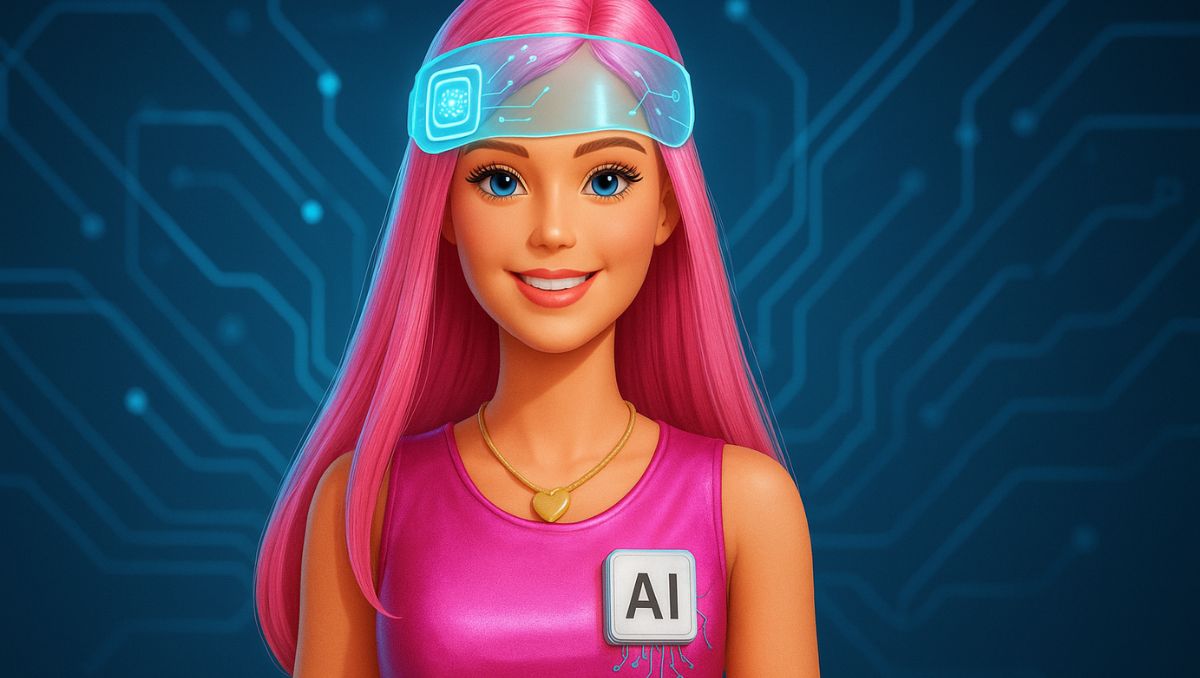
In a groundbreaking move, the Mattel OpenAI partnership is set to revolutionize the toy industry. Mattel is known for iconic brands like Barbie and Hot Wheels. The company has joined forces with OpenAI. They plan to integrate generative AI into toys and content creation. This collaboration could reshape how children experience play. It enables interactive, intelligent storytelling. It also introduces a new era of co-creative imagination in childhood.
Key takeaways
- Mattel and OpenAI’s alliance brings generative AI to toys like Barbie, Hot Wheels, and more.
- AI-powered tools will help both toy designers and consumers, enhancing play and storytelling.
- First AI-integrated Mattel products are expected by the end of 2025.
Generative AI Meets Toy Innovation
Mattel is reimagining toy creation with OpenAI‘s advanced models. They are using ChatGPT and other tools to streamline design. These tools enhance storytelling and enrich digital experiences.
For example, Barbie dolls may soon feature AI-powered story creators, allowing children to generate personalized adventures. Hot Wheels fans could design custom racing narratives or unlock unique digital tracks with simple voice prompts. This aims to transform passive play into dynamic, co-creative storytelling. Kids can create stories alongside AI.
Behind OpenAI Mattel partnership: Empowering designers and engineers
This partnership empowers Mattel’s creative teams by integrating OpenAI’s ChatGPT Enterprise into their operations. It enables designers and engineers to innovate faster and bring new concepts to market quickly. By using generative AI to automate routine tasks, Mattel can focus more on imaginative work. This enhances product development and positions the company as a leader in digital-first toy creation.
A strategic shift for both OpenAI and Mattel
This is more than just a tech experiment — it’s a strategic leap.
For Mattel, it reinforces its position as an innovation-first toymaker. For OpenAI, it’s a bold expansion into consumer-facing physical products, not just digital tools and software.
This alliance shows OpenAI’s aim to integrate generative AI into daily life, particularly for children. The specific formats stay undisclosed. The first OpenAI-powered Mattel product is expected by late 2025. It will likely be app-connected toys or interactive AI companions.
Why Mattel-OpenAI partnership matters for the toy industry?
The integration of generative AI in toys is transformative, introducing dynamic play patterns and moving beyond scripted responses.
Mattel leads the way, but with growing competition, other toymakers will likely follow with AI innovations. This evolution reshapes the blend of imagination and technology. OpenAI is collaborating to make the next generation of toys intelligent. These toys will be creative and interactive. AI will become a central part of childhood play.
The future of play in the age of Generative AI
Looking ahead, the Mattel-OpenAI partnership is set to transform toys and how children learn and interact with the world. As AI integrates into play, we can expect toys that adapt to learning styles, inspire creativity, and enhance social connections. This marks the start of a new era where technology and imagination redefine childhood in the digital age.
The promise of AI-powered toys
When AI toys are used responsibly, it has the potential to enhance learning and boost creativity. It can support children with special needs with below benefits:
- Personalized Learning: AI can adapt stories or games to a child’s reading level or interests, keeping them more engaged.
- Support for Neurodiverse Kids: Interactive toys could help children with autism in practicing communication. They offer a safe and responsive environment for children with speech delays.
- Multilingual Exploration: Toys can switch between languages, helping kids grow up bilingual or explore new cultures through play.
- Storytelling on Demand: Children can co-create stories with toys, opening up new avenues for imagination and expression.
Still, these innovations must come with ethical oversight to protect children’s development and privacy.
Risks of AI toys for children
Mattel is partnering with OpenAI to launch AI-enhanced toys like Barbie and Hot Wheels. This partnership is blurring the line between innovation and intrusion. While these toys offer exciting interactive features, experts urge caution.
For example, a similar innovation in 2015—“Hello Barbie” used cloud AI to hold conversations and remember details kids shared. But researchers later found the doll could be hacked, risking access to home Wi-Fi and private voice recordings.
Such cases must bring attention to below risks of using AI for toys:
- Engaging Play, But at What Cost? These toys can respond to kids in real-time, but may shape conversations and limit imaginative exploration.
- Data Privacy Concerns: Smart toys can collect sensitive voice data. Past issues like the hacked Hello Barbie raise red flags.
- Lack of Transparency: Parents may not always know what’s being recorded or how AI models respond.
- Need for Stronger Safeguards: Experts call for clear data use policies, opt-in consent, and privacy-by-design principles.
Without strong guardrails, AI toys could become more about data mining than delight.
Read more opinion pieces on OpenAI Mattel Partnership and its impact on children and toy industry:
- How smart do toys need to be, really? – by Vox
- Mattel and OpenAI have partnered up – here’s why parents should be concerned about AI in toys – by The Conversation
- Don’t Let Silicon Valley Move Fast and Break Children’s Minds – The New York Times
Frequently Asked Questions
1. Will kids need internet to use the AI features in Mattel toys?
Yes, initial AI functionalities are expected to run via cloud-based tools, requiring connectivity for full access.
2. Are there any data privacy concerns with AI in toys?
Mattel states it’s working closely with OpenAI to guarantee child safety, data protection, and age-appropriate use.
3. Can parents modify the AI responses?
While details are still emerging, customization and parental controls are expected to be part of the user experience.
4. Will older Mattel toys be updated with AI features?
The focus is now on new product lines, though future updates for existing digital products aren’t ruled out.
5. Will this partnership expand to educational toys too?
Mattel hinted at broader use cases beyond entertainment, so educational integrations are likely in the future.
Learn more about how major companies are adopting AI
Mattel is not the only major brand adopting AI for its operations or products, here are few more interesting AI adoption cases to explore:
- ChatGPT Search Upgrade: Shopping Without Login
- How Chipotle AI Cuts Hiring Time by 75% and automates operations
- Google Cloud AI for McDonald’s – Risks and Customer Experience Efficiency
- Google Veo 3: Advanced AI for Filmmaking With Examples
- AI Therapy Bots Reach Psychology’s Gold Standard [Therabot]
- AI.gov: US AI for Governance Risks + EU AI Act Comparison
- AI Cartoon from Text? Stanford’s Tom And Jerry Breakthrough
Get the latest updates about using AI for daily and workplace productivity:
This blog post is written using resources of Merrative. We are a publishing talent marketplace that helps you create publications and content libraries.
Leave a Reply